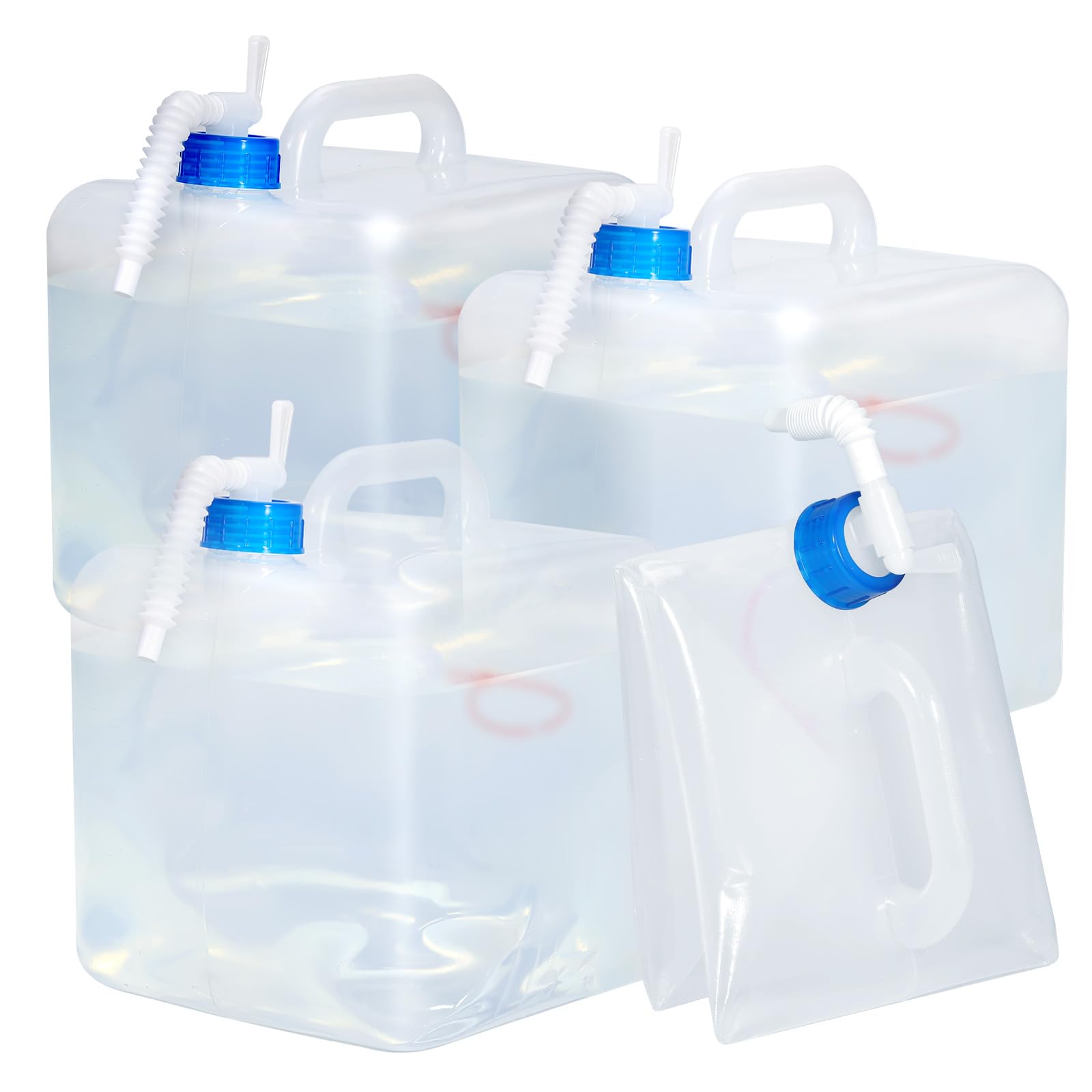
What should you check before filling a camping water jug?
Start with the campground, not the container. Check the current campground page or call ahead to learn whether potable water is available at your dates and site. The National Park Service advises campers to confirm water facilities before arrival because amenities differ by campground; some primitive sites have nonpotable water or none at all. If the source is uncertain, do not assume that a clear-looking tap, stream or lake is safe to drink.
List the jobs that need water: drinking, cooking, handwashing and general cleanup. Separate the clean drinking-water plan from any utility-water plan. Label containers by use so a jug that held untreated or wash water is not accidentally placed at the drinking station. A four-container set gives you placement choices, but its advertised capacity is not a recommendation for how much water your group needs. Weather, activities, people, pets and the availability of refills all change that calculation.
Inspect the jug and spigot before leaving home. Confirm that the opening, closure and dispensing parts are intact and that the container is suitable for the water use you intend. The Amazon listing identifies the 2.6-gallon PN-1529 as a BPA-free collapsible water container with a spigot; that listing does not replace the maker instructions or prove that a questionable water source is potable.
How to set up a collapsible water jug at camp in 7 steps
Use this sequence for a car-accessible campsite where water can be carried to a stable dispensing station. Follow any product-specific cleaning or use directions that came with the jug.
1. Confirm the source and assign each jug a job
Identify the designated potable tap before you fill a drinking-water container. Ask the campground operator if the posted status is unclear. Keep a separate, clearly marked container for utility water if you need water for gear washing or similar tasks.
CDC guidance says water of uncertain safety must be treated before drinking, cooking or washing food. A storage jug and spigot only hold and dispense water; they do not filter or disinfect it.
2. Inspect and clean the empty container
Open the jug and inspect seams, cap and spigot for damage, residue or an unusual odor. Wash and rinse it according to its product directions before use. CDC recommends regularly cleaning safe-water containers and keeping their openings protected from contamination.
If the jug has previously held a chemical, fuel or another unsafe substance, do not repurpose it for drinking water. The CDC specifically warns against storing drinking water in containers that held toxic chemicals.
3. Fill carefully and close every opening
Use the confirmed safe source for water intended for drinking or food preparation. Keep the container opening away from the ground and avoid touching the inside of the cap or spigot with unwashed hands. Stop at the capacity and closure limits in the product instructions rather than forcing an overfilled flexible container shut.
Check the cap and spigot for leaks over a suitable area before carrying the jug back. A full 2.6-gallon container is materially heavier than an empty one, so use the carry method allowed by the product and move one container at a time when needed.
4. Choose a level dispensing station
Place the filled jug on a clean, stable surface that supports its weight and lets a cup fit under the spigot. Keep it clear of sharp stones, vehicle traffic, cooking heat and places where it could be knocked over. Position the spigot so it can pour without lifting the entire jug.
A picnic table or dedicated stand may work, but check the surface and campground rules first. Do not put a drinking-water spigot where wash water can splash back onto it.
5. Dispense without contaminating the outlet
Open the spigot only when needed and keep cups, hands and utensils from touching its outlet. Close it fully after each pour. CDC safe-storage guidance favors a small opening or tap because it reduces the need to dip objects into stored water.
Keep the drinking station distinct from the washing area. If a child or another camper cannot use the spigot without touching it, supervise the pour or transfer water to a personal bottle using a clean method.
6. Protect the jug during the stay
Keep the cap closed and store the jug in a cooler, shaded place out of direct sun. Keep it away from fuel, pesticides and other chemicals. The CDC advises these storage conditions for water containers to reduce contamination risk.
Recheck the container and spigot at each refill. If the source changes, confirm its potable status again. If water becomes contaminated or the container is damaged, stop using that supply for drinking until the source and container are addressed.
7. Empty, clean and dry before folding
At checkout, pour remaining water only where campground rules permit. Clean the jug and spigot following the maker directions, rinse as directed and allow the inside and outlet to dry before collapsing it. Folding a wet container into storage makes the next inspection harder.
Inspect the spigot, cap and folds again before packing. Store each empty container away from sharp objects and chemicals so it is ready for the next trip. Replace a damaged part or container rather than relying on a seal that no longer closes correctly.
When does a collapsible jug make sense at camp?
Match the container to the trip rather than assuming one shape solves every water task. The National Park Service notes the storage advantage of collapsible jugs and the added durability of rigid ones.
| Decision | Collapsible jug with spigot | Rigid water jug | Personal refillable bottle | Best-fit situation |
|---|---|---|---|---|
| Empty storage | Folds or flattens after drying. | Keeps its full shape when empty. | Fits in a day pack but holds less water. | Choose a foldable jug when gear storage space is limited. |
| Dispensing | Spigot can serve a fixed station without lifting. | Depends on its cap or tap design. | Drinks directly or pours small amounts. | Use a spigot station for shared cooking and drinking needs. |
| Handling | Flexible walls need a stable support and protection from puncture. | Hard sides can tolerate more bumps but use more room. | Easy for one person to carry. | Choose a rigid jug for rough handling; carry a bottle for each person. |
| Water safety | Requires a clean container and safe source. | Requires a clean container and safe source. | Requires a clean bottle and safe source. | No container makes unsafe source water safe on its own. |
How do you keep drinking and washing water separate?
Use visible labels and a consistent location. For example, keep the drinking-water jug at the food preparation station and a utility-water jug near the approved washing area. Do not switch labels and roles halfway through a trip without thoroughly cleaning the container under the applicable directions. Never return water from a wash basin to the drinking jug.
The PNEUICALLY set contains four containers, which can support separate stations when a group needs them. Decide the allocation before filling rather than putting every jug at one crowded table. Keep each spigot accessible enough to inspect and close; a hidden outlet can drip unnoticed.
If your plan involves collecting water from a natural source, consult current local rules and CDC treatment guidance first. The CDC recommends treating water whose safety is uncertain; boiling is its preferred germ-removal method, with filter-and-disinfect approaches described as alternatives. The jug remains a storage tool after water has been made safe. Do not pour untreated stream water into a container designated for ready-to-drink water.
What camping water jug mistakes should you avoid?
The first mistake is assuming that a campground has potable water because it has a faucet. Confirm the specific facility and current status. The second is using one unmarked jug for drinking, dishwashing and gear cleanup; a shared spigot can then become a point of confusion or contamination.
Another mistake is setting a full flexible jug on a sloped, hot or sharp surface. Give it a stable support, shade and enough clearance to dispense cleanly. Check the cap and spigot after moving it; a closed cap at home does not prove the jug stayed sealed in a vehicle.
Finally, do not collapse the container while water remains inside or store it wet without following care directions. Empty, clean and dry it first. If a closure fails, a seam tears or residue remains after cleaning, replace the affected part or container before using it for drinking water again.
The takeaway
Give safe water a clean, stable station.
A collapsible water jug is most useful when you know the source, give each container one job and make the spigot easy to use without contaminating it. Confirm potable water availability before departure, fill a clean container, place it on a stable shaded surface and keep drinking water separate from utility water. The PN-1529 set gives a car-camping group four 2.6-gallon placement options, while safe filling and careful cleaning remain the essential routine.
Frequently asked questions
Can I fill a collapsible water jug from any campground tap?
No. Confirm that the tap is designated potable and currently in service before filling a jug intended for drinking. Campground water facilities vary, and a tap at a primitive site may be nonpotable.
Does a water jug make lake or stream water safe to drink?
No. A jug stores and dispenses water but does not remove germs or chemicals. Follow CDC and local guidance to treat water of uncertain safety before using it for drinking or food preparation.
Where should I place a collapsible water jug at camp?
Set it on a level, clean support that can hold its filled weight and allows a cup to fit below the spigot. Keep it out of direct sun, away from sharp objects and separate from fuel or washing splash.
How do I keep the spigot clean during a camping trip?
Keep hands, cups and utensils from touching the outlet, and close the spigot after each pour. Follow the product cleaning directions for the spigot and inspect it whenever you refill the container.
How many collapsible water jugs are in the PN-1529 set?
The verified Amazon listing for ASIN B0CLLKZCDB describes four collapsible 2.6-gallon containers with spigots. Plan how many to fill from your group needs and confirmed refill access rather than filling every jug automatically.
How should I store an empty collapsible water jug after camping?
Empty, clean and dry the container and spigot according to the supplied care directions before folding. Inspect the cap, outlet and folds, then store the jug away from sharp items and chemicals.