What belongs in a toiletry bag for air travel?
Start with the routine you will actually follow, not the full contents of your bathroom. Write down what you use in the morning, at night and immediately after arrival. Most travelers need a small group of dental, skin, hair and grooming items; trip-specific products may include sunscreen or insect repellent. If an item is easy to obtain at the destination and you are unlikely to use it, leave it behind.
Next, divide that list by screening rule rather than by product category. For carry-on travel in the United States, TSA says liquids, aerosols, gels, creams and pastes must be in containers no larger than 3.4 ounces or 100 milliliters, with those containers fitting inside one clear quart-size zip-top bag per passenger. That clear bag is the checkpoint container; your larger toiletry organizer is the system that holds the clear bag and your dry items before and after screening.
Do not assume every bathroom product is an ordinary toiletry. Aerosols, flammable products, sharp grooming tools and medically necessary liquids can have separate conditions. Use the TSA What Can I Bring tool and the FAA PackSafe guidance for the exact item, then confirm the airline and destination rules when they may be stricter.
How to pack your toiletry bag in 7 steps
This sequence keeps screening requirements separate from everyday organization, so the same bag remains useful at the airport and at your destination.
1. Build a trip-specific checklist
List items by use: morning, evening, in transit and trip-specific. Mark each item as liquid or dry, and note anything medicinal, pressurized or potentially restricted. This first pass prevents duplicate products from quietly filling the bag.
Plan for the length and conditions of the trip, but stay conservative. A weekend does not need the same quantities as a two-week trip, and a hotel that supplies basics may reduce what you need to carry.
2. Separate carry-on liquids before organizing anything else
Put all regulated carry-on liquids, gels, aerosols, creams and pastes into the single clear quart-size bag required by TSA. Count toothpaste, lotion and similar spreadable products as part of this group, not as dry items. Every container in the clear bag should be 3.4 ounces or 100 milliliters or less.
Keep the clear bag near the top or front of your carry-on until screening is complete. Do not bury it in the deepest compartment of the toiletry organizer, because you may be asked to remove it for inspection.
3. Choose the smallest useful containers
Use travel-size retail containers or clean reusable containers that close securely and are appropriate for the product inside. Add a simple label when the contents are not obvious. Decant only enough for the trip, and never transfer a product into a food or drink container that could create confusion.
A smaller container is useful only when it still closes correctly. Replace cracked caps, loose pumps and distorted bottles instead of relying on the organizer to contain a predictable leak.
4. Secure every lid and create a second leak barrier
Wipe bottle threads, tighten caps and lock pumps when the packaging allows it. Place products that have leaked before in a small sealed pouch within the clear liquids bag. Keep absorbent items such as cotton pads away from containers that could open under pressure or movement.
Before packing, hold each closed bottle upside down over a sink for a short check. This is not a guarantee against leakage in flight, but it can reveal a loose cap before the product reaches your clothes.
5. Group dry items by the order you use them
Place toothbrushes, combs, solid toiletries and other permitted dry items in separate mesh or zippered compartments. Grouping by routine is usually faster than grouping by product type: morning items together, evening items together and occasional items in a less prominent pocket.
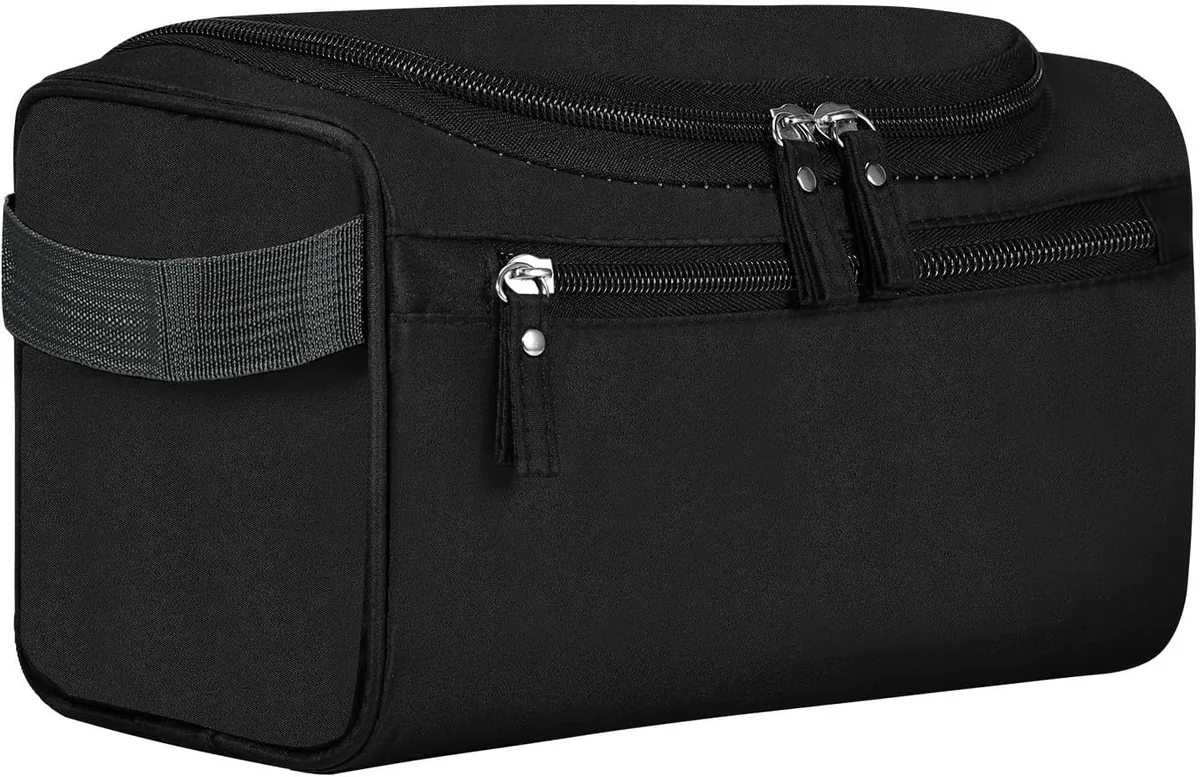
Keep clean tools away from damp cloths and used items. The easy-view compartments in the PNEUICALLY Hanging Travel Toiletry Bag help you see small essentials without emptying the main section onto a shared sink.
6. Keep medications distinct and accessible
Do not mix prescription or medically necessary items loosely among cosmetics. TSA allows medically necessary liquids in excess of the usual carry-on size limit in reasonable quantities for a trip, but passengers should declare them to officers for inspection. International travelers should also check whether a medication is permitted at the destination.
Follow the applicable labeling and documentation rules rather than treating the toiletry bag as a substitute for original or required packaging. The U.S. Department of State advises international travelers to carry prescriptions in labeled containers and to keep medications in carry-on luggage.
7. Pack for screening access and the first night
Close the hanging bag only after confirming that the clear liquids bag can be reached quickly. Put the organizer in a stable part of your carry-on where bottles stay upright when practical, and avoid crushing it beneath shoes or heavy equipment.
After screening, return the clear bag to the organizer. When you arrive, hang the bag only from a secure fixture that can support it, open the compartments and keep the first products you need at eye level. You now have one repeatable system from suitcase to bathroom.
Carry-on vs. checked toiletries: what changes?
The best location depends on the item, quantity, access needs and current transport rules. This table is a planning aid, not a replacement for checking the exact product with TSA, FAA, your airline and your destination.
| Packing dimension | Carry-on approach | Checked-bag approach | Best-fit scenario |
|---|---|---|---|
| Ordinary liquids, gels, creams and pastes | Use containers of 3.4 oz / 100 mL or less inside one clear quart-size zip-top bag. | Larger containers may be possible, but item-specific and hazardous-material limits still apply. | Carry on only what you need during the journey; check larger permitted backups. |
| Dry toiletries and solid grooming items | Keep permitted items in organizer compartments where they are easy to inspect. | Pack permitted items with protection against breakage, bending or contamination. | Carry on essentials that would be difficult to replace after a delay. |
| Medically necessary liquids | TSA permits reasonable quantities above 3.4 oz / 100 mL with declaration and separate screening. | Avoid relying only on checked baggage for medication you may need or cannot easily replace. | Keep essential medication accessible and follow labeling and destination requirements. |
| Personal-care aerosols | The TSA liquid limit applies at the checkpoint; item-specific restrictions also matter. | FAA quantity limits and protected release devices apply to permitted medicinal or toiletry aerosols. | Check the exact aerosol in FAA PackSafe before choosing either bag. |
How do you use a hanging toiletry bag in a small hotel bathroom?
First check that the towel bar, hook or door fixture is secure and suitable for hanging weight. Do not hang the bag from a light fitting, sprinkler, mirror edge or another fragile fixture. Open it where products will not fall into a toilet or onto a wet floor, and keep the hook clear of doors that may close on it.
Keep daily items in the most visible compartments and leave backups closed. A rotating hook can help the organizer face the usable side of a narrow bathroom, while mesh pockets make it easier to spot small items. The goal is not to display everything; it is to reduce the number of loose objects competing for limited counter space.
Before checkout, let damp items dry when time allows, wipe moisture from containers and check every pocket. Repack the clear liquids bag for the return screening rather than assuming the outbound arrangement is still intact.
What toiletry packing mistakes cause the most trouble?
The most common mistake is treating the organizer itself as the TSA liquids bag. A water-resistant toiletry bag does not replace the required clear quart-size zip-top bag for ordinary carry-on liquids. Keep the two roles distinct: the clear bag is for screening, and the organizer is for orderly storage.
- Packing full-size products for a short trip without checking whether they belong in carry-on or checked baggage.
- Assuming water-resistant fabric makes the entire organizer waterproof or able to contain every spill.
- Leaving pumps unlocked, caps dirty or bottles so full that ordinary movement can force product out.
- Mixing medication with cosmetics in a way that hides labels or makes essential items difficult to reach.
- Hanging an overloaded bag from an unstable bathroom fixture or packing damp items immediately before departure.
A final 60-second packing check
Confirm that every planned item is present once, all ordinary carry-on liquids fit the clear quart-size bag, and special items have been checked against current rules. Press each cap and pump, verify that the medication group is accessible, and make sure the organizer closes without force. Finally, place the clear liquids bag where you can remove it at screening and keep the exact product guidance available on your phone if an item is unusual.
A good toiletry system should make the trip simpler at three moments: security, the first night and repacking. If your setup does those jobs without unnecessary products, you have packed enough.
The takeaway
Separate screening rules from daily organization.
Use one clear quart-size bag for regulated carry-on liquids, keep dry items and medications in intentional groups, and place everything inside a hanging organizer that remains easy to inspect and use. Check the exact item rules before every trip because transport and destination requirements can change.
Frequently asked questions
Can I put my TSA liquids bag inside my toiletry bag?
Yes. You can keep the clear quart-size liquids bag inside a larger toiletry organizer between uses, but it should remain easy to remove for checkpoint screening. The clear liquids bag still needs to meet current TSA requirements.
Does toothpaste count as a liquid for air travel?
Yes. TSA includes pastes in the 3-1-1 liquids rule, so ordinary carry-on toothpaste should be in a container of 3.4 ounces or 100 milliliters or less and fit in the clear quart-size bag. Medically necessary items can have different screening procedures.
Should toiletries go in carry-on or checked baggage?
Use carry-on for permitted essentials you need in transit or cannot easily replace, and consider checked baggage for larger permitted backups. Always check item-specific TSA and FAA restrictions because some products are limited or prohibited regardless of convenience.
How do I keep toiletries from leaking on a plane?
Tighten clean caps, lock pumps, replace damaged containers and add a sealed inner pouch for products with a leak history. Keep bottles upright when practical, but remember that no packing method can guarantee a leak-free flight.
Can medication stay in a hanging toiletry bag?
It can be carried inside the organizer if it remains clearly identified and accessible, but the bag does not replace applicable labeling, documentation or screening requirements. Check destination rules for international travel and keep essential medication in carry-on luggage.
Is a water-resistant toiletry bag waterproof?
No. Water-resistant fabric can help with ordinary bathroom splashes, but it should not be treated as submersible or as a guaranteed barrier against leaking bottles. Use secure containers and an additional sealed pouch when leakage would matter.