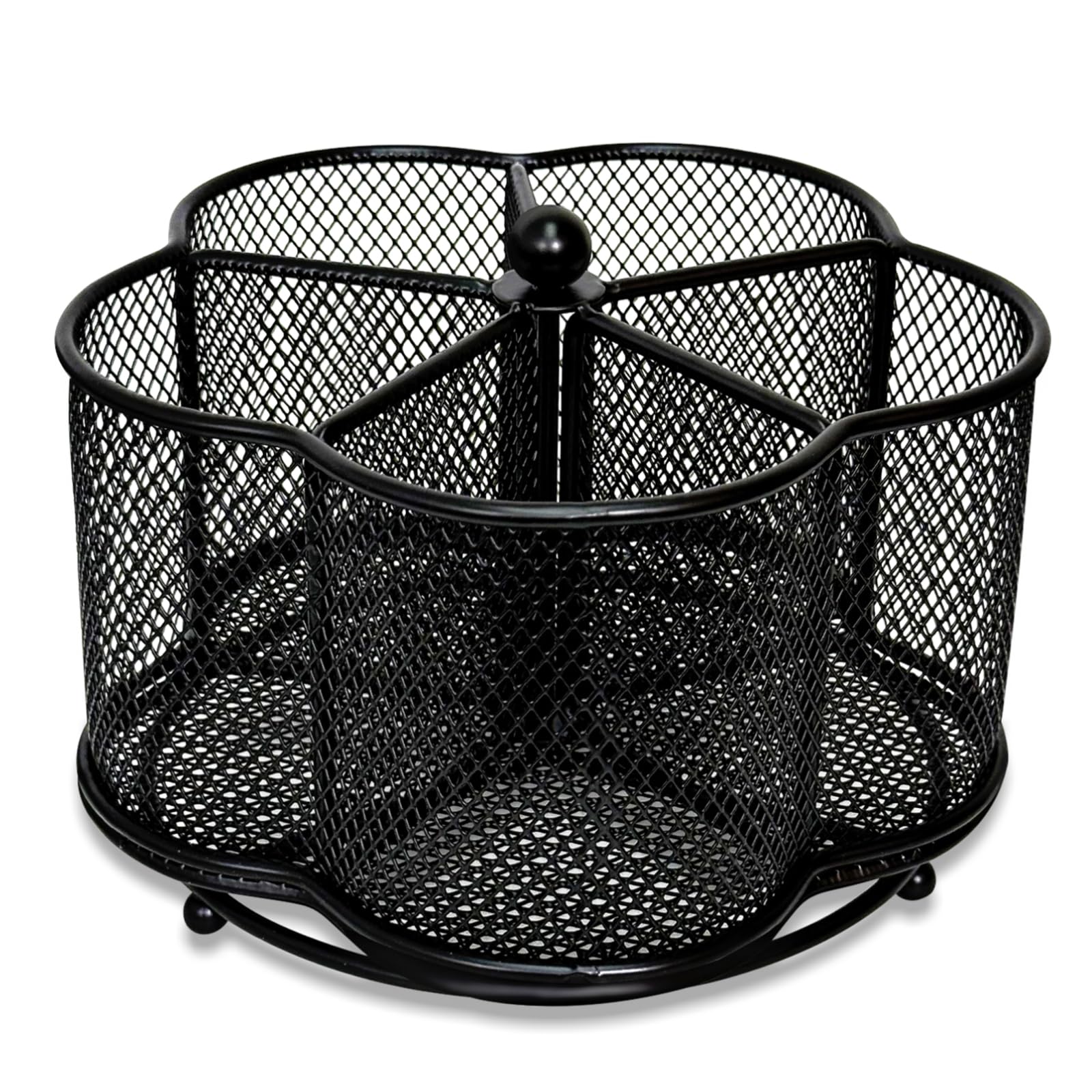
A small desk can support focused work when every item has a reason to be there. The goal is not to create an empty surface for a photograph. It is to make the tools you use easy to reach and everything else easy to put away.
This approach works for a compact home office, a bedroom study corner or a shared family workspace. Start with the work you actually do, then build the surface around that routine.
1. Clear the surface before organizing it
Remove everything from the desktop and return only what supports a normal work session. Extra cables, old notes, duplicate pens and rarely used tools can move to a drawer or another storage area.
Cleaning the entire surface first makes it easier to see how much usable space you have and where natural work zones should sit.
2. Create three simple desk zones
Use a primary zone for the computer or notebook directly in front of you. Place frequently used tools in a reach zone beside your dominant hand. Reserve the far edge for a lamp, a small plant or one reference item.
Keeping these zones distinct prevents pens, charging cables and papers from drifting into the space where you actually work.
3. Organize small tools vertically
Pens, markers, scissors and brushes take less surface area when they stand upright. Open compartments let you identify the right tool without opening a drawer or searching through one crowded cup.
A rotating organizer is especially useful in a shared workspace because each side can hold a different category and turn toward the person who needs it.
4. Give paper and cables clear limits
Keep only the documents connected to current work on the desk. A single folder or tray creates a visible limit: when it fills, something must be filed, recycled or completed.
Route charging cables along the back edge and remove devices that do not need to charge. Fewer loose lines make even a narrow desk feel more settled.
5. Finish with a two-minute reset
At the end of the day, return tools to their compartments, close notebooks and remove cups or packaging. Write down the first task for tomorrow, then leave the central work zone clear.
The reset is intentionally small. A system that takes two minutes is more likely to survive busy weeks than a complicated weekly reorganization.
The takeaway
Keep the system simple.
Protect the center of the desk for real work. Move small tools upward, limit paper to one active area and reset the surface for two minutes at the end of each day.